International Community
The vision for the Center for Living with Nature is an international one that will reach out to the world community. Our focus is to consolidate our research on the best organic farming, sustainable agriculture, agro-ecology, rebuilding practices to restore nature, and self-sustaining practices from all over the world into our data base and educational system. Our vision is to also create self-sustaining communities all over the world and engage globally in organic farming projects in impoverished areas, restoration projects to reforest areas, projects to recreate habitats for animals, projects to clean up our oceans, and undertakings to restore healthy ecological systems all over the world. We are one world.
Some of our initial research and valuable educational information will come from some of the countries that are today leading in sustainable practices. Germany is now 100% self-sustaining in the way of energy, having enacted a 10-year-plan to remove itself from nuclear and coal. They are a leading example on this front. Germany also leads the way with algae powered buildings that rely entirely on renewable energy that creates biofuel, produces heat, shades the buildings, oxygenates the air, and abates street noise. Is it possible to get off of nuclear, coal, and other destructive energies? Germany is proving it to be yes in less than 10 years time and has much to teach us.
India is leading the way with a composting toilet system, called SBT, that feeds the land and produces gigantic healthy food. It uses nature to filter through layers of rock, twigs and dirt and come out at the other end purified by nature with clean water. India is proving through this self-sustaining practice that it is possible to filter our sewage through nature and create healthier soil and food instead of polluting our oceans with this waste.
Cuba is a leading example of ecological agriculture and agroecology, which is an approach to farming that encourages local production by small-scale farmers using sustainable strategies and combining Western knowledge and traditional expertise. According to Miguel Altieri, Professor of Agroecology at the University of California, Berkeley, the most productive urban farms yield up to 20 kg of food per square meter, the highest rates in the world, using no synthetic chemicals. Is it possible to feed the world with sustainable agriculture? Cuba demonstrates it is in their small microcosmic part of the world.
The Fukushima disaster in Japan has brought great minds forward in terms of solutions. Japan is teaching us that healthy organic farming with healthy ecological systems in place scavenge the nuclear in the air, create ecological balance, and make for healthy food and a safer environment. Dr. Teruo Higa, who is the pioneer of a product called EM, or Effective Microorganisms, has demonstrated on farm lands that are close to Fukushima, that in using EM, no detectable levels of nuclear radiation could be found in the food. This is nature in action. Having "living" ecological systems, intact with healthy microorganisms, will not only produce healthy food, but help clean up the pollution of heavy metals, GMO, nuclear, etc. in our air. Japan has much to teach us.
Denmark has become the first 100% organic country. The government has announced that it will convert the entire country's agriculture into organic and sustainable farming. As ambitious of a plan that it is, it also seems to be achievable. Land belonging to the government will be cultivated using organic and biodynamic methods, and the government will support and finance those working and investing in this sector, to develop new technologies and ideas that promote growth.
The vision for the Center for Living with Nature is an international community dedicated to service all Kingdoms of Nature, our beautiful Mother Earth, and all life who walks upon her, humans, birds, fish, animals, bees, trees, plants and all life.
Our Stories from Around the World
Our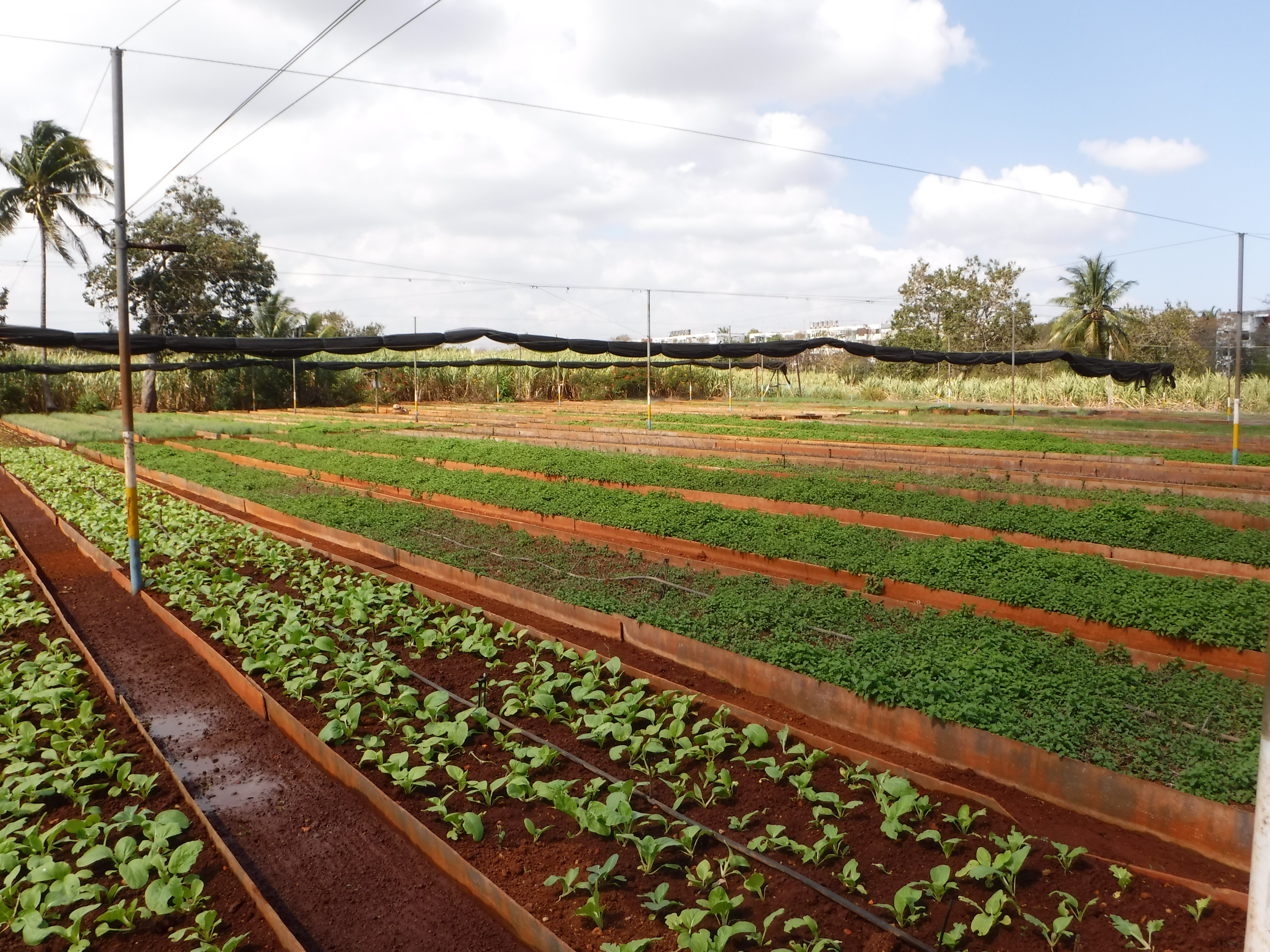 first stop in internationally researching the best organic farming and sustainable agriculture in the world headed us off to Cuba and quite an amazing experience. The agricultural abundance that Cuba experiences disproves both the myth that organic farming on a grand scale is inefficient or impractical and the other myth that organic farming cannot feed the world. "The most productive urban farms yield up to 200Kg of food per square meter, according to Miguel Altiera, the highest rate in the world, using no synthetic chemicals." Cuba's climate is tropical and a breeding ground for bugs, yet there were almost no pest problems due to composting, worms, artisanally produced biopesticides and green manures. Apart from almost pest free plants and trees, it was so amazing not to see one bug in any of the farming houses or apartments we walked into or stayed in for an entire 2 weeks, demonstrating the impact of a healthy ecological system on our living quarters.
Cuba further demonstrated the correlation between healthy organic foods and a healthy body and mind, as both physical and mental disease diminished as their people ate nature's foods intact with the life-giving energy of the Universe. The highlight and honor of our trip was meeting Miguel Salcines from the movie How Cuba Survived Peak Oil and his daughter Isis Maria Salcines. Miguel is owner of Vivero Organoponico Alamar, Cuba's most successful urban organic farm. We experienced the farm first hand and Miguel shared the insights and techniques that have helped shape this operation into one of Cuba's finest.
Some of our initial research and valuable educational information will come from some of the countries that are today leading in sustainable practices. Germany is now 100% self-sustaining in the way of energy, having enacted a 10-year-plan to remove itself from nuclear and coal. They are a leading example on this front. Germany also leads the way with algae powered buildings that rely entirely on renewable energy that creates biofuel, produces heat, shades the buildings, oxygenates the air, and abates street noise. Is it possible to get off of nuclear, coal, and other destructive energies? Germany is proving it to be yes in less than 10 years time and has much to teach us.
India is leading the way with a composting toilet system, called SBT, that feeds the land and produces gigantic healthy food. It uses nature to filter through layers of rock, twigs and dirt and come out at the other end purified by nature with clean water. India is proving through this self-sustaining practice that it is possible to filter our sewage through nature and create healthier soil and food instead of polluting our oceans with this waste.
Cuba is a leading example of ecological agriculture and agroecology, which is an approach to farming that encourages local production by small-scale farmers using sustainable strategies and combining Western knowledge and traditional expertise. According to Miguel Altieri, Professor of Agroecology at the University of California, Berkeley, the most productive urban farms yield up to 20 kg of food per square meter, the highest rates in the world, using no synthetic chemicals. Is it possible to feed the world with sustainable agriculture? Cuba demonstrates it is in their small microcosmic part of the world.
The Fukushima disaster in Japan has brought great minds forward in terms of solutions. Japan is teaching us that healthy organic farming with healthy ecological systems in place scavenge the nuclear in the air, create ecological balance, and make for healthy food and a safer environment. Dr. Teruo Higa, who is the pioneer of a product called EM, or Effective Microorganisms, has demonstrated on farm lands that are close to Fukushima, that in using EM, no detectable levels of nuclear radiation could be found in the food. This is nature in action. Having "living" ecological systems, intact with healthy microorganisms, will not only produce healthy food, but help clean up the pollution of heavy metals, GMO, nuclear, etc. in our air. Japan has much to teach us.
Denmark has become the first 100% organic country. The government has announced that it will convert the entire country's agriculture into organic and sustainable farming. As ambitious of a plan that it is, it also seems to be achievable. Land belonging to the government will be cultivated using organic and biodynamic methods, and the government will support and finance those working and investing in this sector, to develop new technologies and ideas that promote growth.
The vision for the Center for Living with Nature is an international community dedicated to service all Kingdoms of Nature, our beautiful Mother Earth, and all life who walks upon her, humans, birds, fish, animals, bees, trees, plants and all life.
Our Stories from Around the World
Our
first stop in internationally researching the best organic farming and sustainable agriculture in the world headed us off to Cuba and quite an amazing experience. The agricultural abundance that Cuba experiences disproves both the myth that organic farming on a grand scale is inefficient or impractical and the other myth that organic farming cannot feed the world. "The most productive urban farms yield up to 200Kg of food per square meter, according to Miguel Altiera, the highest rate in the world, using no synthetic chemicals." Cuba's climate is tropical and a breeding ground for bugs, yet there were almost no pest problems due to composting, worms, artisanally produced biopesticides and green manures. Apart from almost pest free plants and trees, it was so amazing not to see one bug in any of the farming houses or apartments we walked into or stayed in for an entire 2 weeks, demonstrating the impact of a healthy ecological system on our living quarters.Cuba further demonstrated the correlation between healthy organic foods and a healthy body and mind, as both physical and mental disease diminished as their people ate nature's foods intact with the life-giving energy of the Universe. The highlight and honor of our trip was meeting Miguel Salcines from the movie How Cuba Survived Peak Oil and his daughter Isis Maria Salcines. Miguel is owner of Vivero Organoponico Alamar, Cuba's most successful urban organic farm. We experienced the farm first hand and Miguel shared the insights and techniques that have helped shape this operation into one of Cuba's finest.